
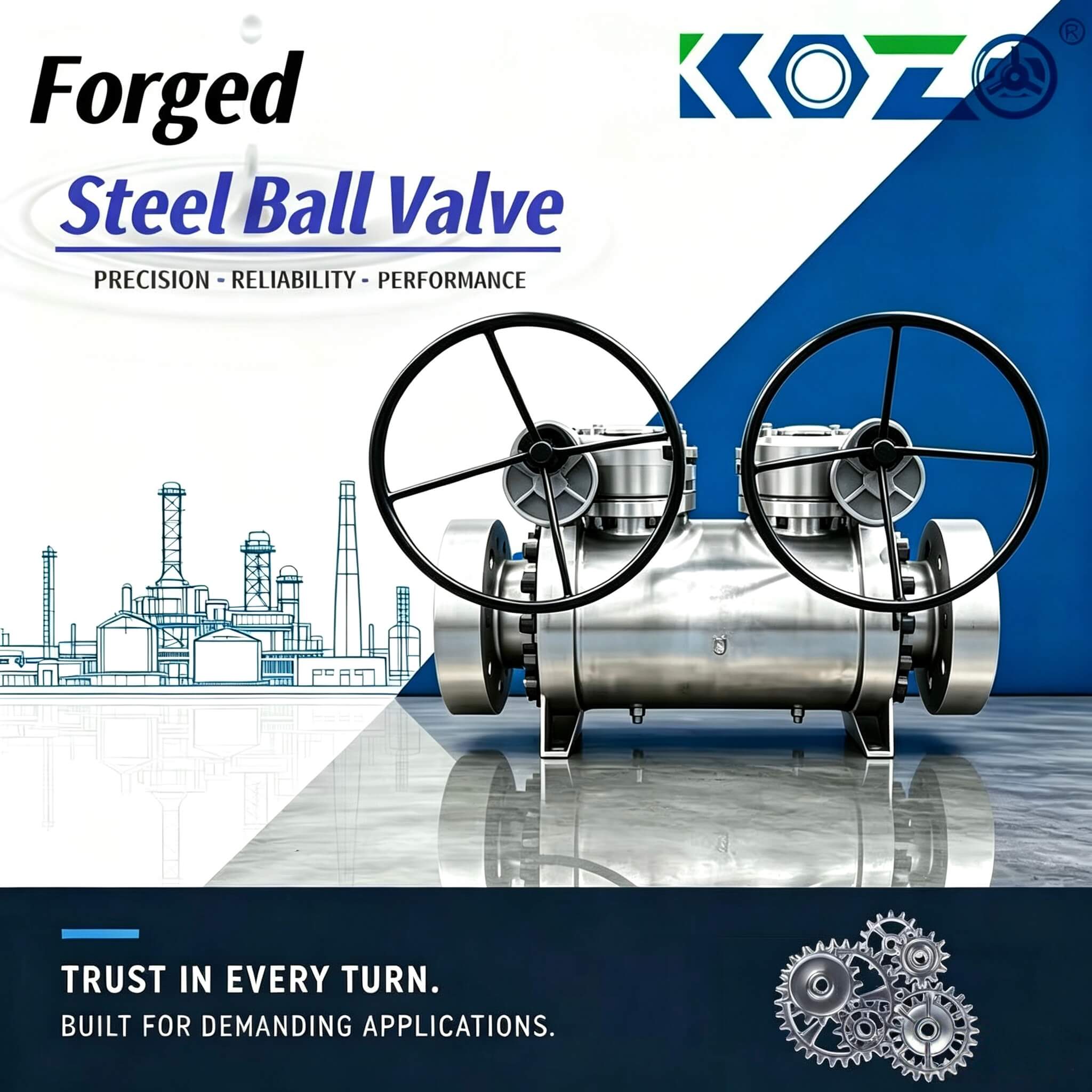
Double Ball Ball Valve With Double Bolck and Bleed
Applicable Standards:
Ball Valve Design Standards: API 6D, BS 5351, ASME B16.34
Face-to-Face Dimensions: ASME B16.10, API 6D
Flange Standards: ASME B16.5 / ASME B16.47
Butt-Weld End Standards: ASME B16.25
Fire Safe Testing: API 607, API 6A
Inspection and Testing Standards: API 598, API 6D
Design Features:
Structure: 2-piece or 3-piece body design
High-integrity sealing structure with low operating torque
Double Block and Bleed (DBB) function
Cavity self-relief mechanism
Fire-safe design
Anti-blowout stem
Anti-static design
Locking device (for lever-operated valves)
ISO 5211 actuator mounting pad
Emergency sealant injection function
Application Fields:
Oil & Gas: Wellhead equipment, pipeline pigging stations, storage tank inlets/outlets, oil and natural gas transmission
Chemical Processing: Reactor isolation, toxic media transport, high-pressure process lines
Energy & Power: Power generation, boiler fuel shut-off, main steam line isolation
Special Applications: Subsea pipelines, LNG facilities, strategic reserve depots
Brand: KOZO
Valve Materials: Carbon steel, high-temperature Cr-Mo steel, stainless steel, duplex stainless steel, Monel, aluminum bronze, special alloy steels, etc.
Valve Type: KOZO Ball Valve
Valve Testing: 100% tested prior to delivery
Warranty: 18 months after shipment or 12 months after installation (whichever occurs first)
Valve Structure: Trunnion-mounted ball valve
Size Range: 1/2" to 48"
Pressure Class: ASME Class 150, 300, 600, 900, 1500, 2500
Lead Time: 15 – 30 days
Samples: Samples available upon request from KOZO Valves
Valve Color: Customized according to customer requirements
Packaging: Plywood crates
Minimum Order Quantity (MOQ): 1 set
Country of Origin: Zhejiang, China (Mainland)
Shipping Port: Shanghai or Ningbo
Payment Terms: L/C, D/P, T/T, Western Union
Kezhong DBB Double Block and Bleed (DBB) Ball Valves are available in two series: Full Bore and Reduced Bore. The internal diameter of the flow passage in the Full Bore ball valve matches that of the pipeline; this not only minimizes fluid resistance but also facilitates easier cleaning of the pipeline. The fluid resistance of the Reduced Bore ball valve is significantly lower than that of standard valves of the same nominal size, and it weighs approximately 30% less than a full-bore ball valve of the same size, thereby substantially reducing manufacturing costs and the final price. Consequently, it enjoys a much wider range of applications.
The DBB Double Block and Bleed Ball Valve is designed to replace the complex assemblies of multiple valves typically found in traditional piping systems. It helps reduce potential leak points within the system and provides rapid drainage and shut-off capabilities. The DBB ball valve saves a significant amount of installation space, simplifies the installation process, and helps reduce pressure within the piping system. Furthermore, it facilitates equipment cleaning and maintenance, thereby lowering operational costs.
Performance Features of the DBB Double Block and Bleed Ball Valve:
Effective Anti-Blowout Sealing Structure: The valve stem features an anti-blowout (back-sealing) design. A sealing gasket is installed at the base of the stem; the sealing force of this back-seal is generated by the pressure of the medium within the valve cavity. As the internal pressure increases, the sealing force also increases, ensuring a reliable seal for the valve stem. Even in the event of an abnormal pressure surge within the valve cavity, the stem will not be ejected. The stem packing utilizes a carefully engineered V-ring structure, which effectively converts the internal pressure of the medium—combined with the compressive force from the external gland—into a robust sealing force for the valve stem.
1. Fire-Safe Structure: The ball valve can be designed with a fire-safe structure upon customer request. In the event of a fire—should the primary soft seals be consumed by flames—the DBB ball valve's various components form an effective metal-to-metal hard-sealing structure. This prevents the leakage of the medium and helps contain the spread of the fire.
2. Locking Mechanism: For valves installed in the field—or in applications where there is a risk of accidental operation by unauthorized personnel—a locking mechanism is provided. This is particularly useful in high-vibration environments where the valve handle might be susceptible to accidental shifting (e.g., from fully open to fully closed, or vice versa). The valve handle features a locking hole at both the fully open and fully closed positions; this allows the valve to be securely locked when necessary, serving as an effective safety precaution.
3. Anti-Static Structure: The DBB ball valve can be designed with an anti-static structure. This involves the installation of conductive springs between the ball and the valve stem, as well as between the valve stem and the valve body, to ensure electrical continuity and prevent the accumulation of static electricity.