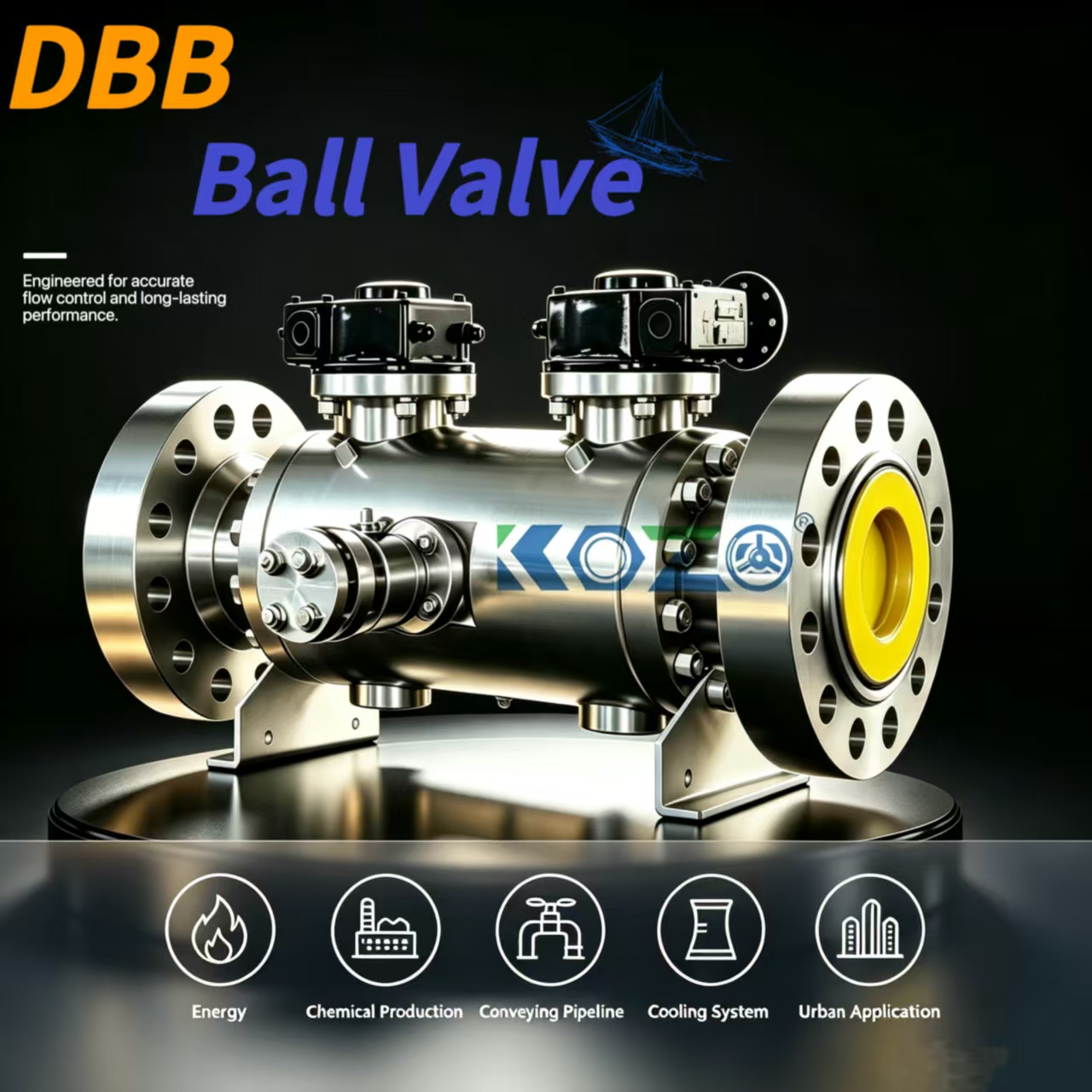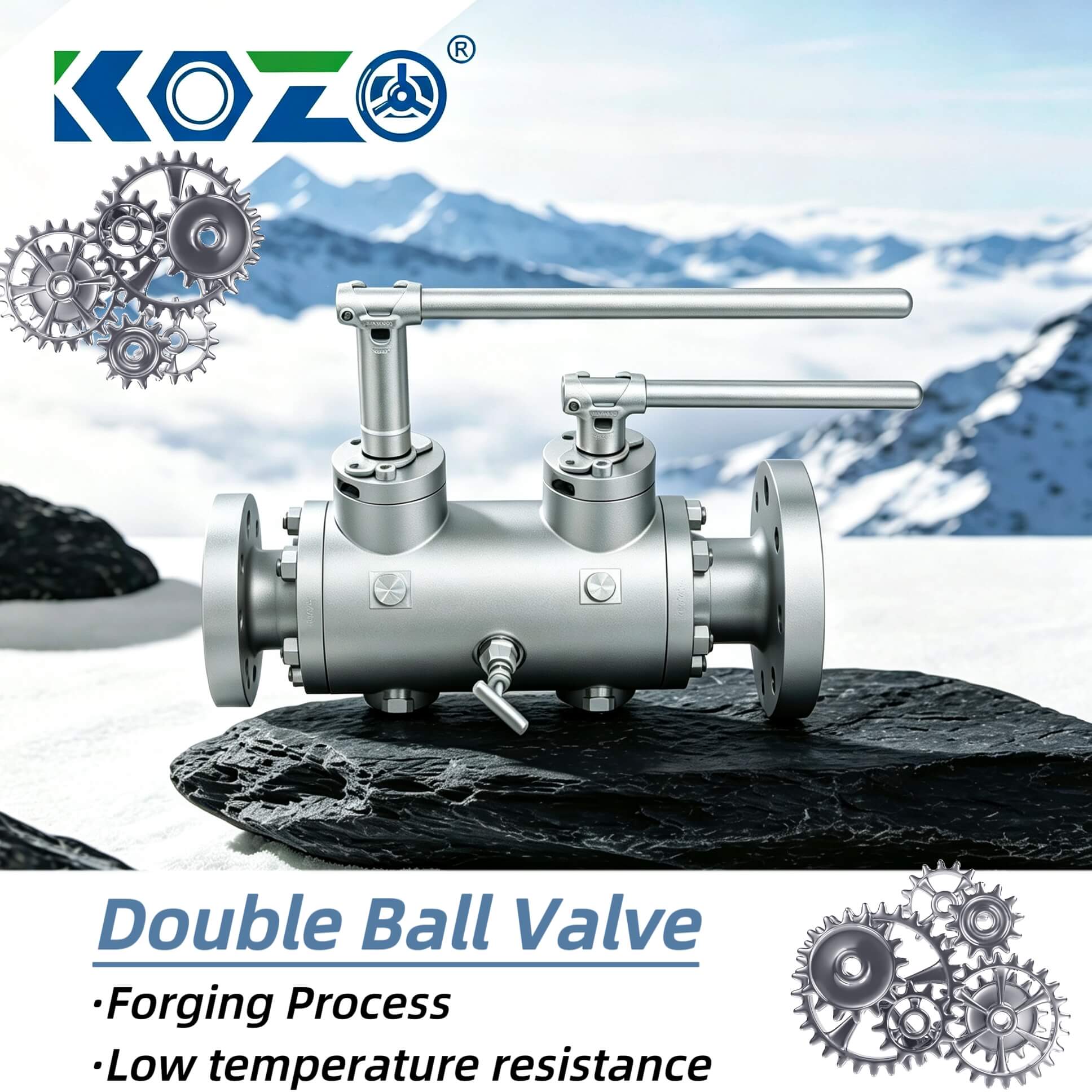
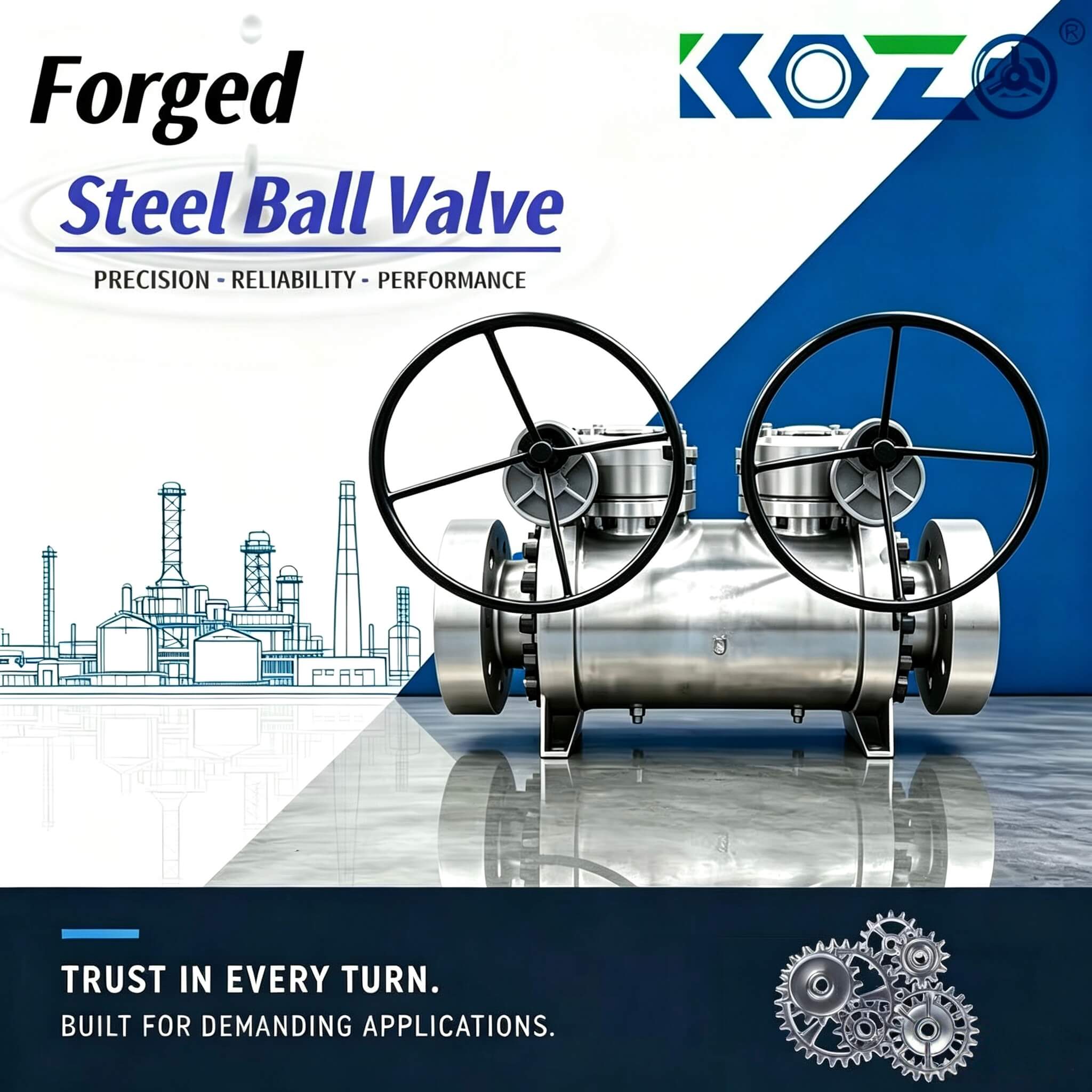
Forged steel double ball valve
Applicable Standards:
Ball Valve Design Standards: API 6D, BS 5351, ASME B16.34
Face-to-Face Dimensions: ASME B16.10, API 6D
Flange Standards: ASME B16.5 / ASME B16.47
Butt-Weld End Standards: ASME B16.25
Fire Safe Testing: API 607, API 6A
Inspection and Testing Standards: API 598, API 6D
Design Features:
Structure: 2-piece or 3-piece body design
High-integrity sealing structure with low operating torque
Double Block and Bleed (DBB) function
Cavity self-relief mechanism
Fire-safe design
Anti-blowout stem
Anti-static design
Locking device (for lever-operated valves)
ISO 5211 actuator mounting pad
Emergency sealant injection function
Application Fields:
Oil & Gas: Wellhead equipment, pipeline pigging stations, storage tank inlets/outlets, oil and natural gas transmission
Chemical Processing: Reactor isolation, toxic media transport, high-pressure process lines
Energy & Power: Power generation, boiler fuel shut-off, main steam line isolation
Special Applications: Subsea pipelines, LNG facilities, strategic reserve depots
Brand: KOZO
Valve Materials: Carbon steel, high-temperature Cr-Mo steel, stainless steel, duplex stainless steel, Monel, aluminum bronze, special alloy steels, etc.
Valve Type: KOZO Ball Valve
Valve Testing: 100% tested prior to delivery
Warranty: 18 months after shipment or 12 months after installation (whichever occurs first)
Valve Structure: Trunnion-mounted ball valve
Size Range: 1/2" to 48"
Pressure Class: ASME Class 150, 300, 600, 900, 1500, 2500
Lead Time: 15 – 30 days
Samples: Samples available upon request from KOZO Valves
Valve Color: Customized according to customer requirements
Packaging: Plywood crates
Minimum Order Quantity (MOQ): 1 set
Country of Origin: Zhejiang, China (Mainland)
Shipping Port: Shanghai or Ningbo
Payment Terms: L/C, D/P, T/T, Western Union
Forged steel double ball valve - An integrated dual isolation and online verification solution for high-pressure working conditions
Design concept
The two independent ear shaft fixed ball sealing pairs and the middle cavity discharge cavity are integrated into a single forged steel valve body. The valve body is forged to obtain continuous grain flow lines, eliminating the risk of shrinkage porosity and gas holes in castings. Each sphere is rigidly supported by the upper and lower ear shafts. The medium thrust is introduced into the valve body through the ear shafts, and the sealing load is controllable. Core logic: Ensure the integrity of the high-pressure boundary through forging density, achieve dual isolation that can be verified online through the series connection of double fixed balls, and transform the failure from hidden to explicit by the independent coexistence of working seal and safety seal. It provides a compact DBB component that can replace the traditional double valve and discharge manifold for high-pressure, small-diameter and harsh working conditions.
Performance advantage
· Dual isolation and discharge: Two independent ear shaft spherical sealing pairs, with a full-size discharge port in the middle cavity, can verify the integrity of each seal one by one online, meeting the API 6D dual isolation and discharge definition and zero-energy isolation verification requirements.
· Bidirectional zero leakage: Each ball is of a fixed ball structure. The medium of the downstream valve seat is self-tightened and the spring of the upstream valve seat is pre-tightened, meeting the API 598 zero bubble acceptance. It can be reliably shut off from low pressure to full pressure in both directions.
· Double-chamber pressure self-relief: The upstream valve seat of each ball can automatically relieve pressure. When the middle chamber and their respective chambers are reheated and pressurized, the pressure is released to the upstream side without the need for an external safety valve, ensuring the safety of the sealed chambers.
· Low operating torque: The ear bearing bears all the medium thrust, and its operating torque is only 1/3 to 1/5 of that of the floating ball. It can share a single actuator to drive the synchronous opening and closing of the double balls, reducing the cost of complete set procurement.
· Intrinsic high density of forged steel: The grain flow lines of the forgings are continuous, the wall thickness is uniform, and the specific strength is high. Under high-pressure conditions of Class 600 and above, the integrity of the pressure boundary is better than that of cast steel.
· Online verifiability: Without disassembling the pipeline, the health status of each sealing pair can be diagnosed through the medium outflow state of the middle cavity discharge port, supporting predictive maintenance.
· Compact structure: One valve can replace two valves and a drain manifold, reducing the surface size by 40% to 50%. It is suitable for skid-mounted, platform and other space-constrained occasions.
Safety performance
· Fireproof structure: Each spherical sealing pair contains a primary non-metallic seal and a secondary metallic seal, and has passed the API 607/6FA certification. In case of fire, both isolation lines can maintain effective shut-off.
· Anti-blowout valve stem: All valve stems adopt an inverted sealing step design, meeting API 608 standards. Even when the gland is completely loosened, the valve stem will not be blown out.
· Anti-static conduction: The resistance between each ball, valve stem and valve body is ≤10Ω.
· Double-chamber overpressure protection: The valve seat upstream of each ball automatically releases the pressure in its own middle chamber, and together with the middle chamber discharge valve, it forms a double protection.
· Essential anti-misoperation: A single actuator synchronously drives the opening and closing of the double balls, and mechanical interlocks ensure the "cut off first - discharge later" sequence, eliminating errors in the sequence of human operation.
Applicable working conditions
· Media: natural gas, crude oil, refined oil products, hydrocarbons, chemicals, steam, sulfur-containing media
· Scenarios: Upstream and downstream isolation of high-voltage metering skids, safety shut-off at wellheads, ESD nodes on offshore platforms, dual isolation of hydrogenation units, and isolation to prevent leakage of toxic and harmful media
· Drive: Manual, worm gear, pneumatic (spring return), electric, hydraulic