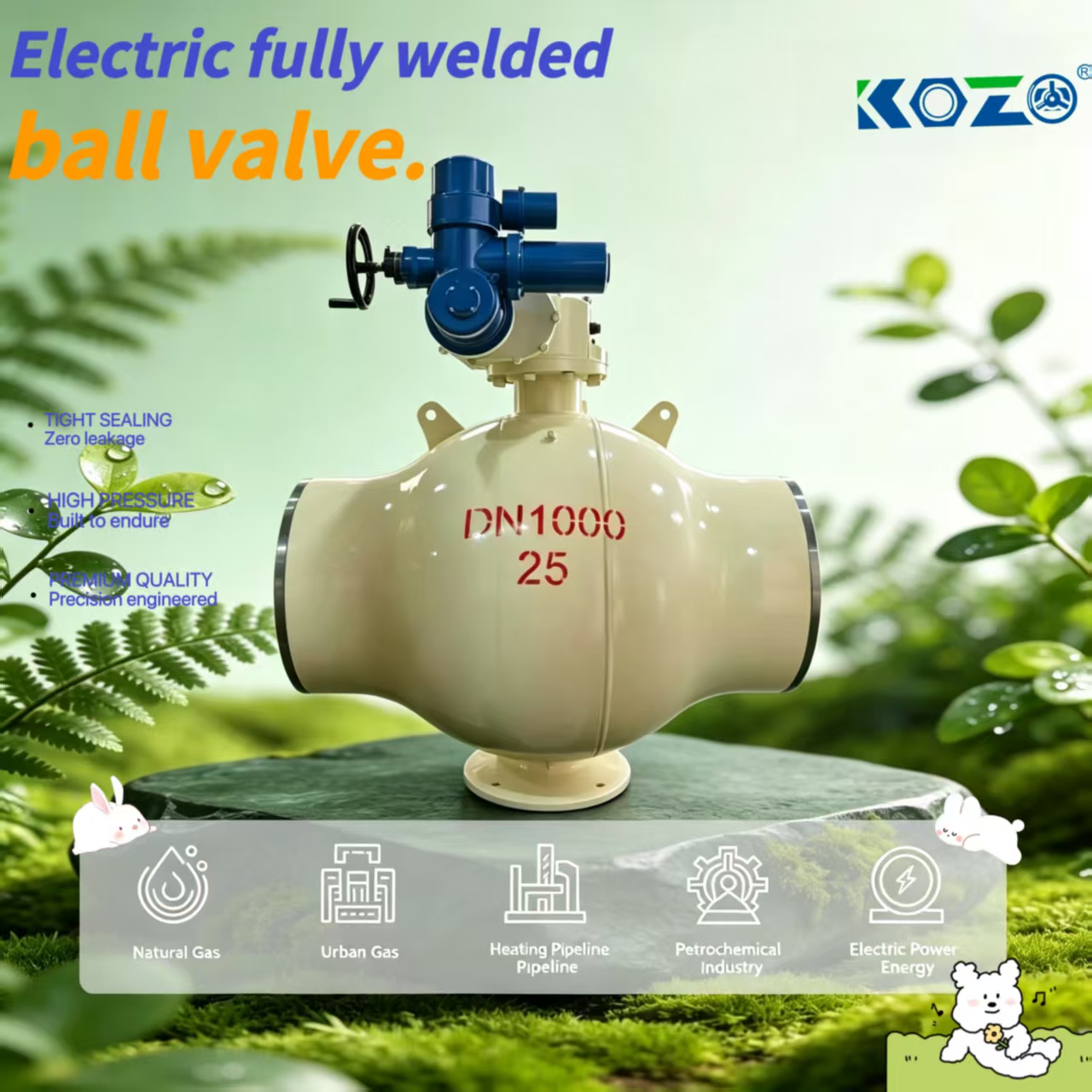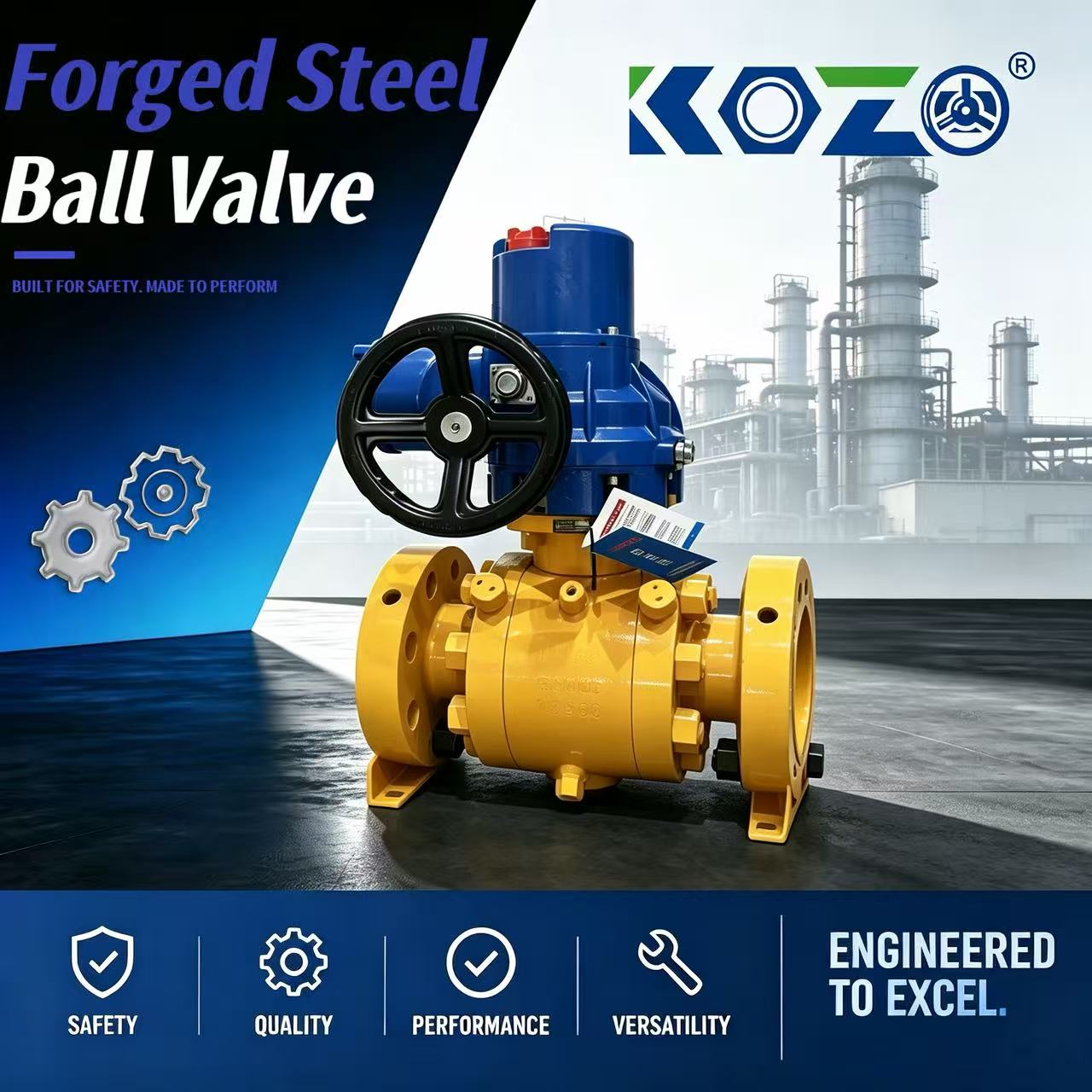
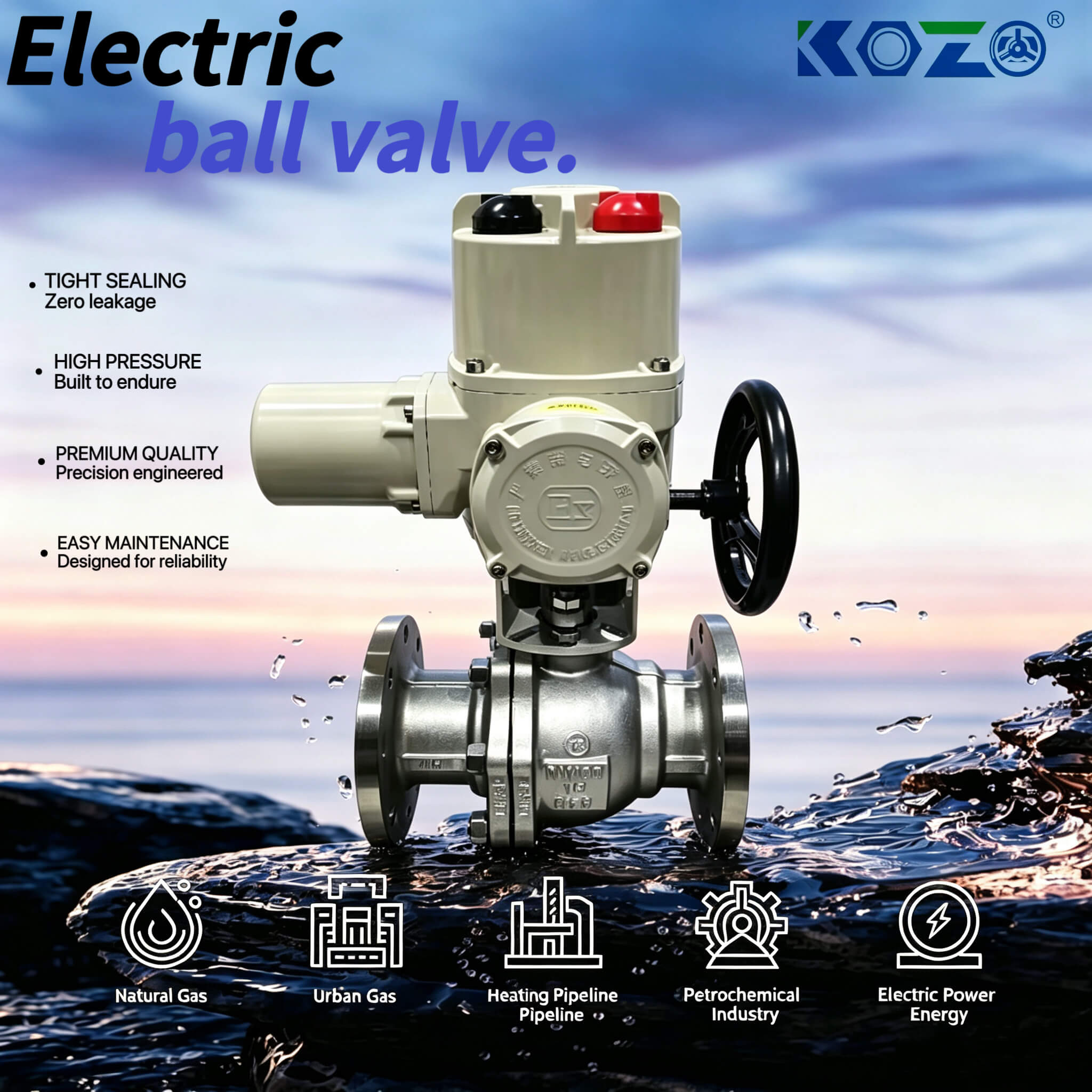
Electric cast steel ball valve
Applicable Standards:
Ball Valve Design Standards: API 6D, BS 5351, ASME B16.34
Face-to-Face Dimensions: ASME B16.10, API 6D
Flange Standards: ASME B16.5 / ASME B16.47
Butt-Weld End Standards: ASME B16.25
Fire Safe Testing: API 607, API 6A
Inspection and Testing Standards: API 598, API 6D
Design Features:
Structure: 2-piece or 3-piece body design
High-integrity sealing structure with low operating torque
Double Block and Bleed (DBB) function
Cavity self-relief mechanism
Fire-safe design
Anti-blowout stem
Anti-static design
Locking device (for lever-operated valves)
ISO 5211 actuator mounting pad
Emergency sealant injection function
Application Fields:
Oil & Gas: Wellhead equipment, pipeline pigging stations, storage tank inlets/outlets, oil and natural gas transmission
Chemical Processing: Reactor isolation, toxic media transport, high-pressure process lines
Energy & Power: Power generation, boiler fuel shut-off, main steam line isolation
Special Applications: Subsea pipelines, LNG facilities, strategic reserve depots
Brand: KOZO
Valve Materials: Carbon steel, high-temperature Cr-Mo steel, stainless steel, duplex stainless steel, Monel, aluminum bronze, special alloy steels, etc.
Valve Type: KOZO Ball Valve
Valve Testing: 100% tested prior to delivery
Warranty: 18 months after shipment or 12 months after installation (whichever occurs first)
Valve Structure: Trunnion-mounted ball valve
Size Range: 1/2" to 48"
Pressure Class: ASME Class 150, 300, 600, 900, 1500, 2500
Lead Time: 15 – 30 days
Samples: Samples available upon request from KOZO Valves
Valve Color: Customized according to customer requirements
Packaging: Plywood crates
Minimum Order Quantity (MOQ): 1 set
Country of Origin: Zhejiang, China (Mainland)
Shipping Port: Shanghai or Ningbo
Payment Terms: L/C, D/P, T/T, Western Union
Electric cast steel ball valve - Intelligent and precise control solution for large-diameter pipelines
Design concept
The large-diameter complex flow channel and high integration are achieved through the near-final forming process of the cast steel valve body, and the precise opening control and remote intelligent diagnosis are realized by the electric actuator. The valve body is cast in accordance with ASME B16.34 standard, and can be formed in one piece with full through-flow channels, reinforcing ribs and discharge interfaces. The ball adopts a fixed ball ear shaft support structure. The medium thrust is introduced into the valve body through the ear shaft, and the operating torque is lower than that of the floating ball. Design logic: To meet the demand for large-diameter pipes based on the economic efficiency of cast steel, to reduce operating torque with ear shaft support, and to achieve precise adjustment and predictive maintenance through electric drive and digitalization, it provides standardized intelligent terminals for large-diameter pipelines without gas sources that require remote precise control.
Performance advantage
High-precision regulation: When combined with variable frequency or stepper motors, it can achieve extremely fine opening control, with a repeatability accuracy within ±0.5% of the stroke. It is suitable for PID closed-loop regulation in process industries.
Powerful thrust and self-locking position retention: The precise deceleration mechanism can output tens of thousands of Newton-meters of torque. The worm gear or brake motor has mechanical self-locking capability, and the valve can reliably maintain its position after power failure.
Economy of large diameter: The valve body is made by casting process. The comprehensive cost of DN150 and above is significantly better than that of forged steel solutions, making it the best choice for large-diameter pipelines.
Low-torque compatibility: The fixed ball ear shaft support structure has a torque of only 1/3 to 1/5 of the floating ball of the same specification, which can be matched with smaller-sized electric heads, reducing the cost of complete set procurement.
Bidirectional airtight seal: The medium of the downstream valve seat is self-tightened, and the spring of the upstream valve seat is pre-tightened, meeting the API 598 zero-bubble acceptance, with reliable bidirectional disconnection from low pressure to full pressure.
Cavity pressure self-relief: The upstream valve seat has an automatic pressure relief function. When the middle cavity is reheated and pressurized, it releases pressure to the upstream side without the need for an external safety valve.
The system is simple and independent: It only requires power supply and does not need auxiliary facilities such as air sources or hydraulic stations, making it suitable for remote unmanned sites.
Safety performance
Fireproof structure: Standard equipped with primary non-metallic seal + secondary metallic seal, certified by API 607/6FA fire test.
Anti-blowout valve stem: The reverse sealing step design complies with API 608, ensuring that the valve stem will not be blown out when the cover loosens.
Anti-static conduction: The resistance of the ball - valve stem - valve body is ≤10Ω.
Cavity pressure self-relief protection: The upstream valve seat automatically relieves pressure to prevent deformation or rupture of the middle cavity due to pressure build-up.
Casting quality control: 100% radiographic testing of pressure-bearing castings, acceptance in accordance with MSS SP-55 to ensure dense pressure boundaries without shrinkage porosity.
Overload protection: Torque switch or electronic torque limit to prevent overload damage to valves and actuators.
Power-off position retention/reset: Standard type power-off position retention; An optional spring return module is available for emergency shut-off in case of power failure, and it is only applicable to medium and small diameters.
Applicable working conditions
Medium: natural gas, crude oil, refined oil products, water, steam, hydrocarbons, chemical media
Scenarios: Remote switch for long-distance pipeline network stations and yards, metering and shut-off for oil depots, process control valves, high-pressure water supply and steam for power plants, slurry transportation, and remote stations without gas sources