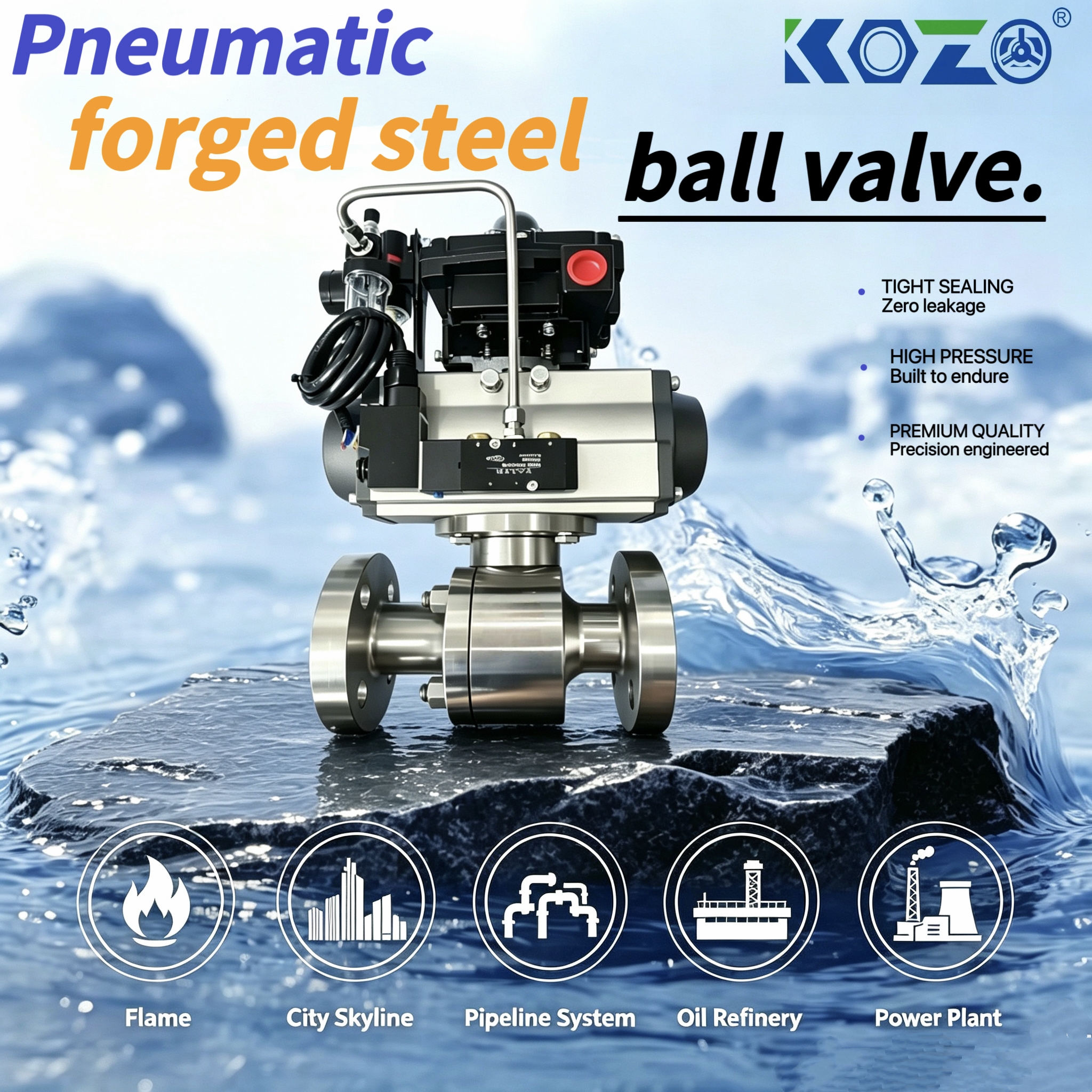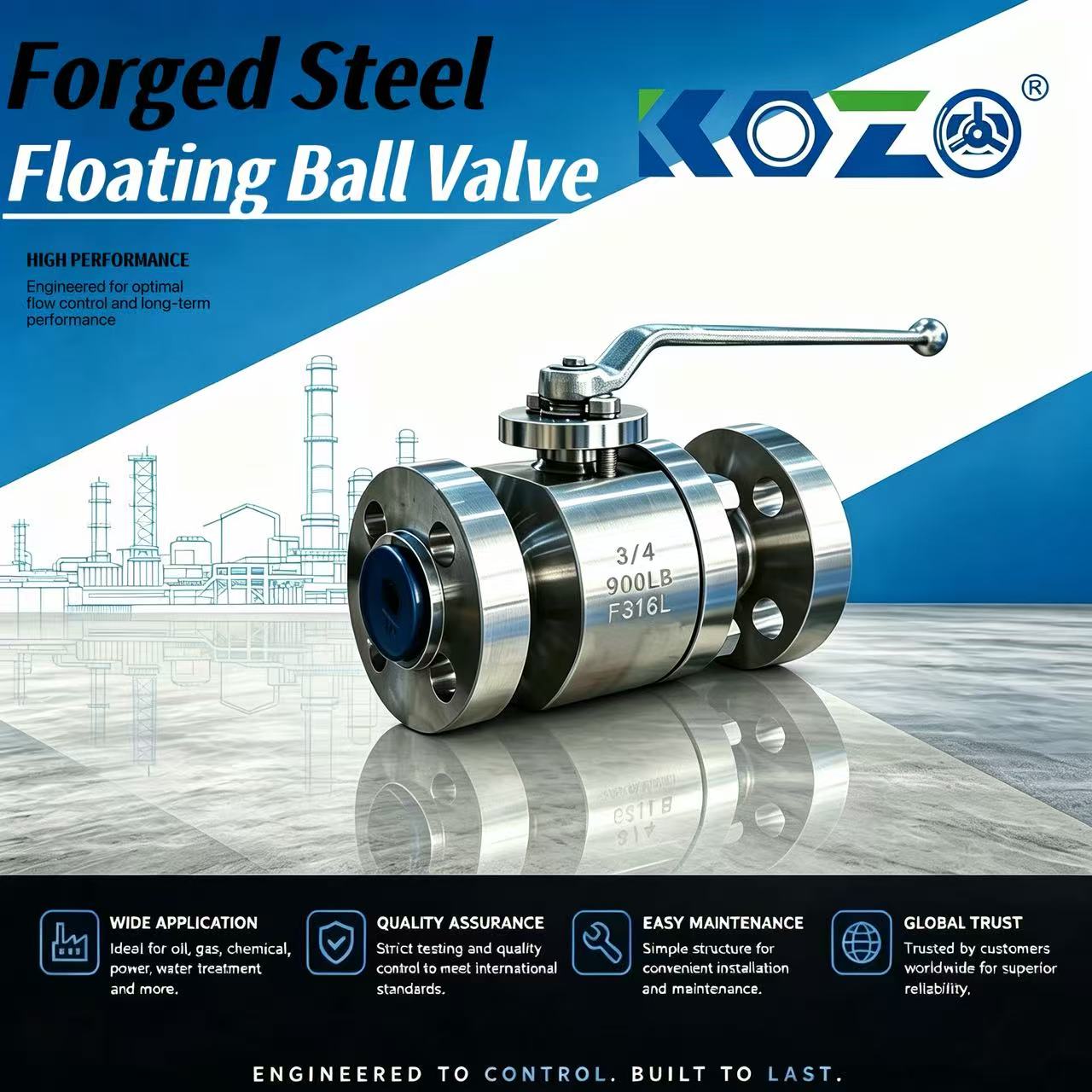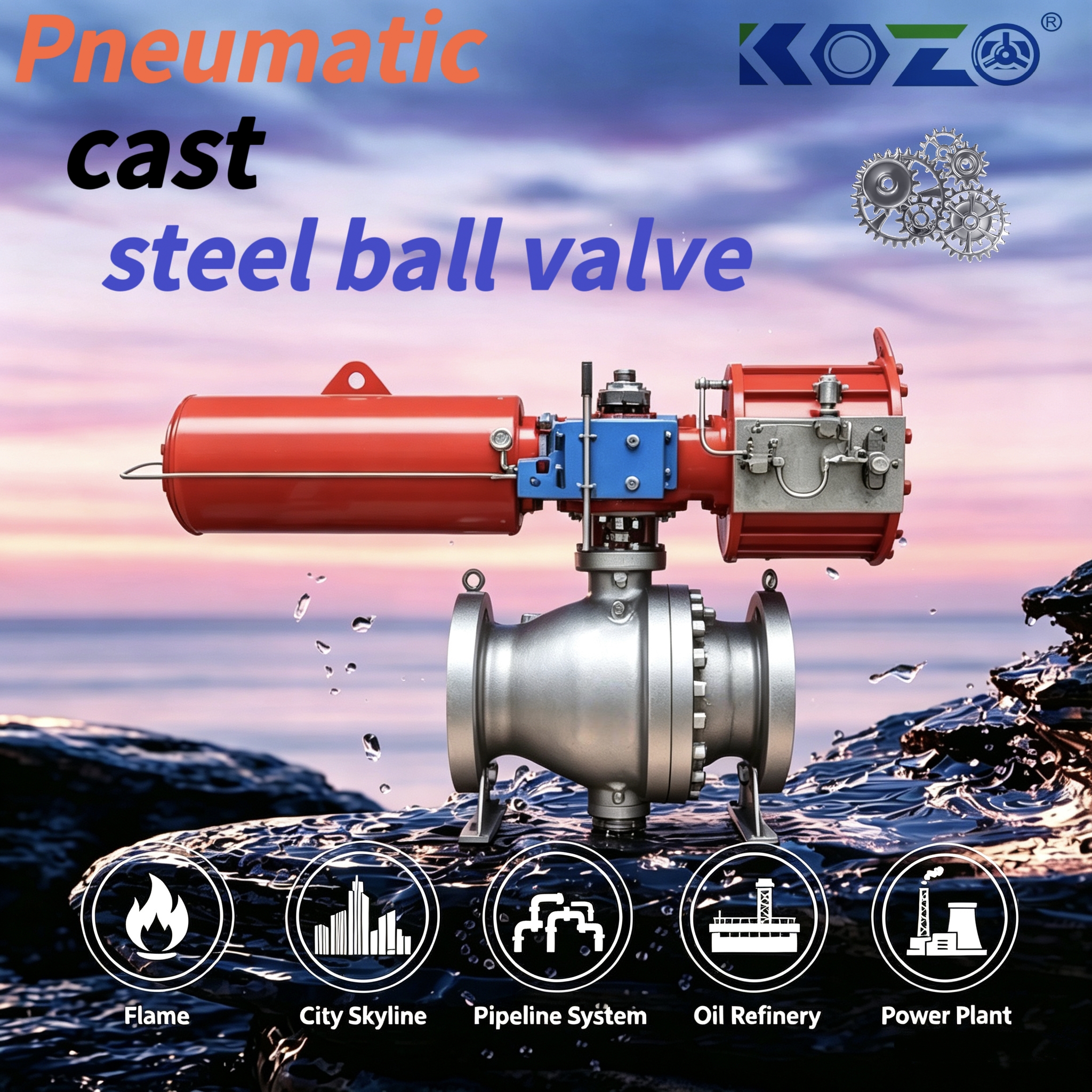
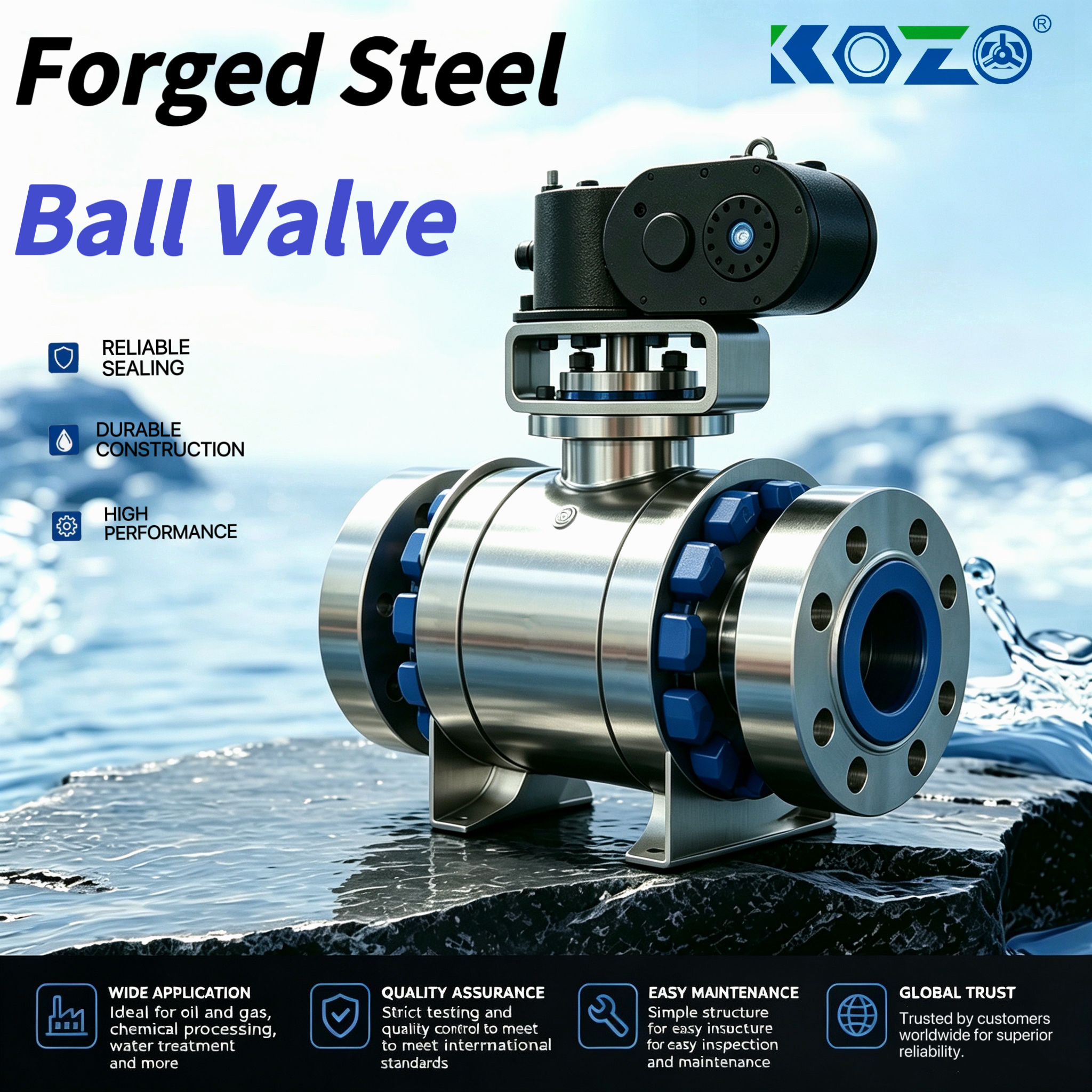
Hard-sealed stainless steel ball valve
Applicable Standards:
Ball Valve Design Standards: API 6D, BS 5351, ASME B16.34
Face-to-Face Dimensions: ASME B16.10, API 6D
Flange Standards: ASME B16.5 / ASME B16.47
Butt-Weld End Standards: ASME B16.25
Fire Safe Testing: API 607, API 6A
Inspection and Testing Standards: API 598, API 6D
Design Features:
Structure: 2-piece or 3-piece body design
High-integrity sealing structure with low operating torque
Double Block and Bleed (DBB) function
Cavity self-relief mechanism
Fire-safe design
Anti-blowout stem
Anti-static design
Locking device (for lever-operated valves)
ISO 5211 actuator mounting pad
Emergency sealant injection function
Application Fields:
Oil & Gas: Wellhead equipment, pipeline pigging stations, storage tank inlets/outlets, oil and natural gas transmission
Chemical Processing: Reactor isolation, toxic media transport, high-pressure process lines
Energy & Power: Power generation, boiler fuel shut-off, main steam line isolation
Special Applications: Subsea pipelines, LNG facilities, strategic reserve depots
Brand: KOZO
Valve Materials: Carbon steel, high-temperature Cr-Mo steel, stainless steel, duplex stainless steel, Monel, aluminum bronze, special alloy steels, etc.
Valve Type: KOZO Ball Valve
Valve Testing: 100% tested prior to delivery
Warranty: 18 months after shipment or 12 months after installation (whichever occurs first)
Valve Structure: Trunnion-mounted ball valve
Size Range: 1/2" to 48"
Pressure Class: ASME Class 150, 300, 600, 900, 1500, 2500
Lead Time: 15 – 30 days
Samples: Samples available upon request from KOZO Valves
Valve Color: Customized according to customer requirements
Packaging: Plywood crates
Minimum Order Quantity (MOQ): 1 set
Country of Origin: Zhejiang, China (Mainland)
Shipping Port: Shanghai or Ningbo
Payment Terms: L/C, D/P, T/T, Western Union
Hard-sealed stainless steel ball valve - Wear-resistant and long-life isolation solution for corrosive, high-temperature and solid-containing working conditions
Design concept
The valve body is made of austenitic stainless steel (such as CF8M/F316, etc.), taking advantage of its corrosion resistance and wide temperature range. The sealing pair adopts a fully metal hard sealing structure. The sealing surfaces of the ball and the valve seat are surfacing with hard alloys such as Stellite or tungsten carbide and are precisely ground. According to the pressure level of the diameter, the floating ball or fixed ball is adapted: for medium and small diameters, the pressure self-tightening seal is achieved by the floating ball, while for large diameters, the low-torque operation is realized by the fixed support of the ear shaft. Core logic: Using stainless steel to deal with corrosion and extreme temperatures, and all-metal hard seals to resist high temperatures, particle erosion and high-frequency operations, it provides a standard isolation solution that is wear-resistant, corrosion-resistant and has a long service life for harsh working conditions that soft seals cannot handle, such as corrosive, high-temperature and solid-containing environments.
Performance advantage
· All-metal hard sealing pair: The sealing surfaces are all made of hard alloy, with no non-metallic soft sealing elements. The upper limit of applicable temperature far exceeds that of PTFE/PEEK, and it remains stable for a long time at high temperatures.
· Resistance to particle erosion: The sealing surface of Stellite or tungsten carbide hard alloy has extremely high hardness and can resist erosion and wear from media containing catalyst powder, pulp, and solid corrosive substances.
· Wide temperature range corrosion resistance: Austenitic stainless steel has no ductile-brittle transition temperature. It maintains toughness and strength throughout the entire temperature range from -196°C to 538°C, and is resistant to chloride ion pitting and various acid, alkali, and salt chemical media.
· Floating ball pressure self-tightening seal: For medium and small diameters, floating balls are used. When closed, the thrust of the medium pushes the ball towards the downstream valve seat, and the sealing specific pressure automatically increases with the pressure difference.
· Fixed ball low-torque operation: For large diameters, the ear shaft fixed ball is adopted. The medium thrust is carried by the ear bearing, and the torque is only 1/3 to 1/5 of that of the floating ball. The actuator has a small specification and is easy to operate.
· Cavity pressure self-relief (fixed ball) : The upstream valve seat automatically slightly opens to release abnormal pressure rise in the middle cavity, eliminating the need for an external safety valve and ensuring intrinsic safety.
· Bidirectional airtight grade sealing: Meets API 598 zero-bubble acceptance, with reliable bidirectional disconnection from low pressure to high pressure.
· No cold flow creep: The all-metal seal has no cold flow deformation problem of PTFE-like materials. The long-term pressure maintaining seal does not loosen, and its service life far exceeds that of soft seals.
· Uniform sealing wear (fixed ball) : The ball is precisely centered and limited by the ear shaft, without eccentric wear, and the wear rate of the upstream and downstream valve seats is consistent.
Safety performance
· Intrinsic fire resistance: The all-metal hard sealing pair itself is a fireproof structure. In case of fire, there is no need for non-metallic secondary seals, directly meeting the API 607/6FA requirements.
· Anti-blowout valve stem: The reverse sealing step design complies with API 608, ensuring that the valve stem is not blown out by the medium pressure when the cover is loosened.
· Anti-static conduction: The resistance between the ball, valve stem and valve body is ≤10Ω.
· High-temperature thermal stability: The metal seal matches the thermal expansion coefficient of the valve body, ensuring no jamming or leakage at high temperatures.
Note on the pressure in the middle cavity of the floating ball: The liquid trapped in the middle cavity of the floating ball may expand abnormally when heated. It is recommended to use a ball with a pressure relief hole or an external discharge valve in high-temperature or temperature-prone situations.
Applicable working conditions
· Medium: High-temperature acetic acid, chlorine-containing high-temperature solvent, oil slurry containing catalyst particles, high-temperature mineral slurry, solid-corrosive process medium, high-temperature flue gas condensate
· Scenarios: High-temperature reaction pipelines in chemical plants, chlorine-containing media on offshore platforms, catalytic cracking in refining and chemical industries, polycrystalline silicon production, solid-containing black water in coal chemical industry, and sulfur recovery
· Drive: Handle, worm gear, pneumatic, electric, hydraulic
· Selection boundary: For high-pressure and large-diameter applications above DN200 or Class 600, it is recommended to choose a fixed ball structure. The floating ball structure with medium and small diameters is more economical